





Ticino invites you to the table
What makes a grotto so special
Ticino cuisine is neither loud nor showy. Here people cook unhurriedly, using few ingredients. Because pleasure, here of all places, is never rushed. Better to savour slowly, that’s the Ticino motto. The world is fast enough already.
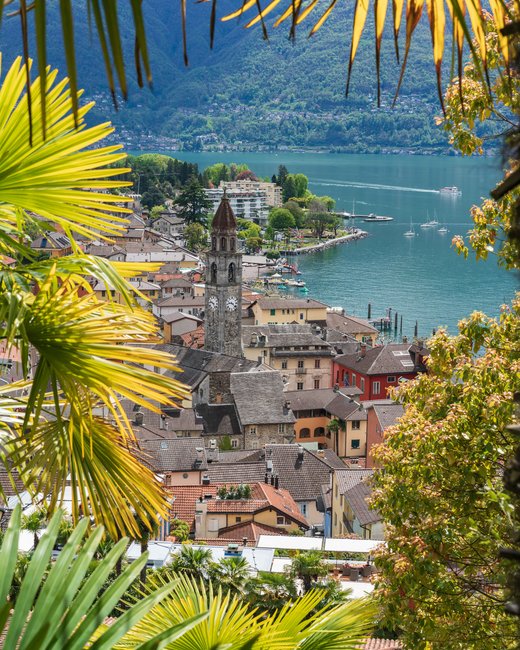
You’re off to Ticino. Because Lake Maggiore is waiting, of course, and at Vista Lakefront Boutique Hotel you’ve found the ideal place to stay. That leaves one more essential ingredient for a successful holiday: the food. But what makes Ticino cuisine what it is?
It’s not the recipes alone, because the “grotti” are also an integral part of Ticino.
“Grotto” comes from the Italian “grotta”, the hidden place; the plural is grotti, and hidden they truly were. They were natural rock cellars at the foot of the mountain slopes. Air circulates between the boulders, and from the crevices it flows out cool and steady. The temperature holds at a constant eight to twelve degrees, summer and winter alike.
And what’s served in these cellars that became inns?
Ticino cuisine is a cuisine of patience and of a few good things. It almost always begins with a board of salumi: coppa from the pork neck, air-dried prosciutto crudo, the small salametti and, for the curious, mortadella di fegato, that hearty liver sausage best eaten with a piece of country bread. Alongside them formaggini, mild fresh cheeses from the Maggia Valley, and pickled vegetables. That’s quite enough.
Then the great classics, all composed on the same principle: few ingredients, plenty of time. Risotto, stirred slowly, in autumn with porcini. Polenta from red-grained maize, turned for hours in a copper pot, served with brasato, beef braised in its own wine, or coniglio, rabbit with herbs and white wine. To finish, torta di pane, the dark bread cake with raisins and pine nuts, with amaretti or, now in October, vermicelles made from fresh chestnuts, for centuries the bread of the poor valleys, today a sought-after regional delicacy.
Drinks come in the boccalino, the earthenware jug with its blue and white pattern. Inside: Merlot del Ticino. The grape variety travelled from Bordeaux into these valleys and has found a second home here, velvety, dark, with a fine edge of bitterness. If you prefer something lighter, order a Bianco di Merlot, pressed white from red grapes.
Back at Lake Maggiore you linger over the pleasure of it all, enjoy another glass by the shore and round off your Ticino day at the hotel. And then you start making plans for tomorrow. What will it taste like?
